
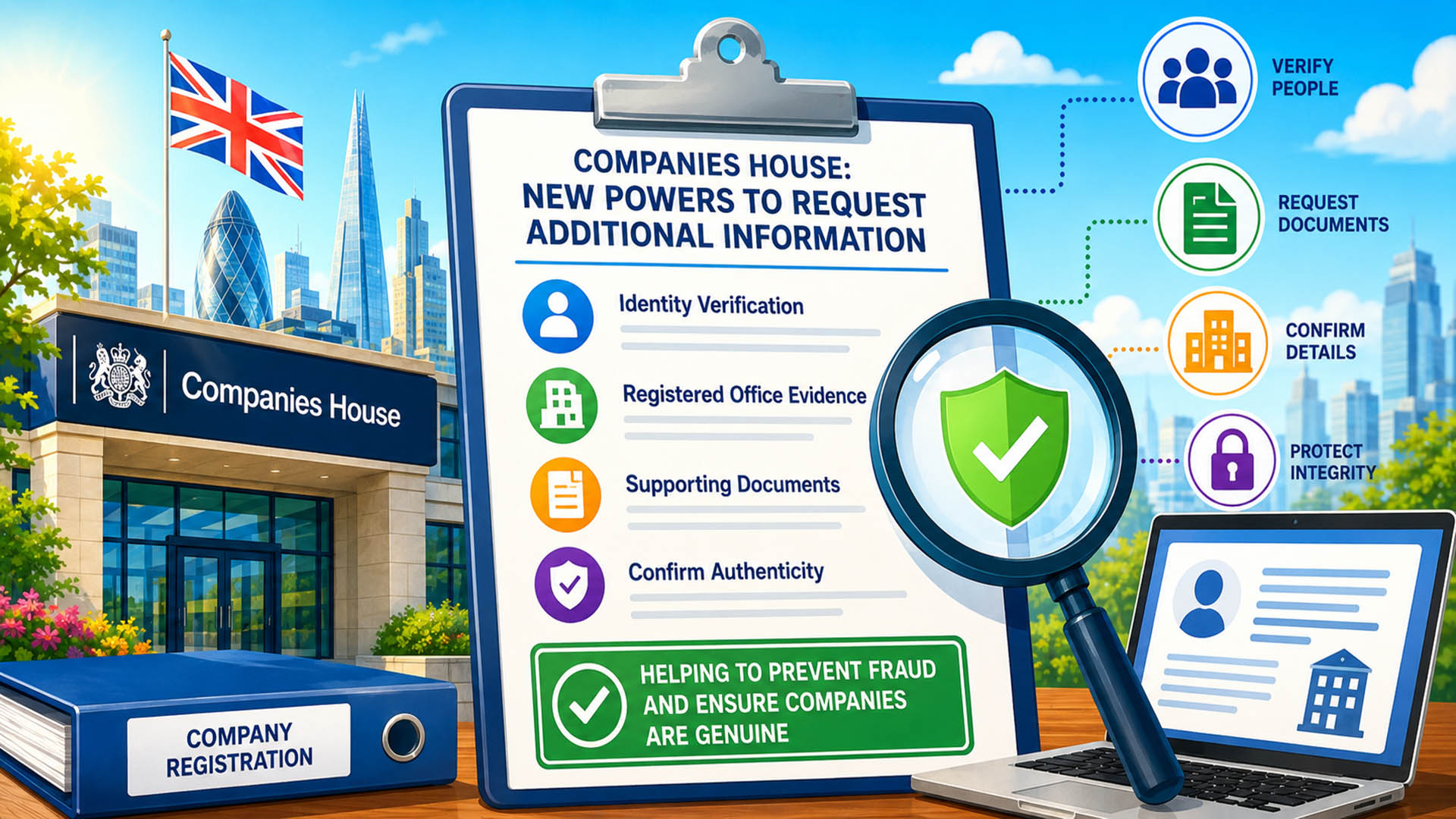
For years, Companies House has been criticised as a toothless beast. Companies could be formed quickly and cheaply, information was largely accepted at face value, and there were limited powers to challenge suspicious filings.
Making it easy to start a company has obvious benefits for the UK economy. Unfortunately, a system designed around speed and trust also creates opportunities for those with less legitimate intentions.
New research provides a striking illustration of the problem. An analysis of Companies House records by anti-money laundering software provider SmartSearch identified more than 3,000 dissolved companies that apparently operated as hairdressers, beauty salons, mini-marts and convenience stores and displayed remarkably similar characteristics. SmartSearch estimates that between £310 million and £464 million may have moved through the companies it identified.
With Companies House now operating under stronger legislation, mandatory identity checks and greater powers to challenge corporate information, perhaps the tide is finally turning.
What did the research uncover?
SmartSearch analysed Companies House records between 2016 and 2026, focusing specifically on businesses registered in the beauty and convenience store sectors. It identified 3,097 dissolved companies with average lifespans of just 170 to 194 days, with unusual similarities in where and when these businesses appeared.
According to the research, companies were heavily concentrated around the same postcodes and registered addresses. Some 83% of the suspect hairdressing companies and 92% of the suspect convenience stores were incorporated during the first two quarters of the year, while more than half were subsequently dissolved in the fourth quarter. The pattern then repeated in subsequent years.
One area of Cardiff alone reportedly contained 119 suspected companies across the two sectors. Of course, a short-lived company, a shared registered address, or a particular incorporation date is not evidence of criminality. However, when thousands of apparently unrelated companies start displaying the same characteristics, it is reasonable to ask why.
How did Companies House become a weak link?
The UK has traditionally made it relatively straightforward to establish a company. For genuine entrepreneurs, that is a good thing; nobody wants to spend weeks navigating bureaucracy before they can start trading. The problem was what happened after incorporation.
Historically, Companies House was primarily responsible for receiving and publishing information. Its ability to question whether that information was accurate was much more limited. Consequently, appearing on the Companies House register was never the same as having a company’s directors, address, and activities independently verified.
Recent evidence to the House of Commons Treasury Committee highlights why this matters. Paul Monaghan, chief executive of the Fair Tax Foundation, told MPs that the Insolvency Service had recently closed five illegal company service providers which, between them, had established 12,000 illegal UK companies.
His criticism went to the heart of the problem. If the overriding objective is to make companies extremely cheap and quick to establish, what safeguards are needed to prevent that convenience from being exploited? The answer isn’t to make life unnecessarily difficult for legitimate businesses, but to make it considerably more difficult to abuse the system.
The problem could extend far beyond a few high street shops
The headline estimate of up to £464 million is significant, but perhaps the most concerning aspect of the SmartSearch research is its relatively narrow scope: it only examined two sectors.
SmartSearch’s modelling suggests that between £310 million and £464 million may have moved through the identified companies. The paper argues that if similar patterns exist across other sectors identified as high risk in the 2025 national risk assessment, the figure over the past decade could exceed £1 billion.
The research also comes amid wider government attention on supposedly “dodgy” retail businesses. Earlier this year, the government announced a specialist unit targeting outlets such as vape and sweet shops suspected of being used to process criminal cash.
This should not cast suspicion on the thousands of perfectly legitimate businesses operating in these sectors. The issue is that an ordinary-looking business can potentially provide a useful front for activity that has little connection with what appears to be happening behind the counter.
Companies House now has powers to ask questions
This is where the position has changed considerably. The Economic Crime and Corporate Transparency Act 2023 expanded the role of the Registrar of Companies, meaning Companies House is no longer expected simply to accept information that has been correctly submitted and add it to the register.
It now has greater powers to query information and request supporting evidence. It can reject new filings where there are reasonable grounds to question whether the information complies with legal requirements, while its powers to remove material already on the register have also been expanded.
There are stronger controls over registered office addresses, greater scope to analyse information for suspicious behaviour and wider powers to share information with other public authorities.
Identity verification is another significant area of change. Since 18 November 2025, identity verification has been a legal requirement, phased in for company directors and people with significant control (PSCs). New directors need to verify their identity when incorporating a company or being appointed, while existing directors are being brought into the system through their confirmation statements.
Taken together, these aren’t cosmetic changes. They move Companies House closer to being an active gatekeeper rather than a passive filing cabinet.
Are we beginning to see the teeth?
There is evidence that Companies House is starting to use its expanded role. In June 2026, Companies House reported that misleading information was being removed from the register at scale and highlighted the need for closer collaboration with HMRC, the Insolvency Service and other partners.
SmartSearch chief executive Phil Cotter also acknowledged that Companies House had made “real progress” since the Economic Crime and Corporate Transparency Act came into force, although the question is whether it can move quickly enough.
Perhaps the most striking feature of the SmartSearch research isn’t one questionable company but the repetition: similar businesses, similar locations, similar lifespans and similar incorporation and dissolution cycles. The information was there; the challenge is spotting the pattern, investigating it and intervening before another generation of companies appears.
New legislation and identity verification make that more achievable, but powers written into legislation only make a difference when sufficient resources, technology, and people are available to use them.
What does this mean for legitimate businesses?
Legitimate businesses arguably have more to gain than lose from a Companies House register that people can actually trust. Banks, suppliers, customers, investors and professional advisers regularly use Companies House information when assessing businesses. Unfortunately, a register containing false addresses, fabricated appointments and companies established for unlawful purposes undermines confidence in everyone who uses it.
However, a more active Companies House also means directors need to take their own responsibilities seriously. Registered office details, directors, PSC information and confirmation statements should accurately reflect the current position of the business, with errors corrected rather than left sitting on the register for years.
Identity verification also means directors and PSCs need to understand when they must provide their Companies House personal code, the unique 11-character code issued after their identity has been successfully verified. Existing directors are generally required to provide it through their company’s next confirmation statement, while the requirements for PSCs depend on their circumstances.
None of this should trouble a properly managed company. In fact, stronger checks should make it harder for fraudulent businesses to hide among legitimate ones. However, the days when Companies House filings could be treated as little more than an annual administrative exercise appear to be disappearing.
Is change finally happening at Companies House?
There will always be a balance between making the UK an attractive place to establish a business and ensuring the system cannot easily be exploited. For too long, critics have argued that the balance was weighted heavily towards speed and convenience, with Companies House collecting enormous amounts of information but having limited ability to challenge what it was told.
That is now beginning to change. Companies House can question filings, request evidence, remove information, share data, and require directors and PSCs to verify their identities. Those are meaningful powers, although the SmartSearch findings demonstrate both why they are needed and the scale of the task ahead.
Perhaps the real test isn’t whether Companies House has finally grown teeth, but whether it can bite quickly enough when the warning signs appear.
At Wilkins Southworth, we help businesses ensure their accounting, tax and corporate affairs are properly managed and compliant. If you’re unsure whether your Companies House records accurately reflect your current business structure, need assistance with correcting historical information, or are dealing with an HMRC enquiry, please contact our team to discuss your situation.