
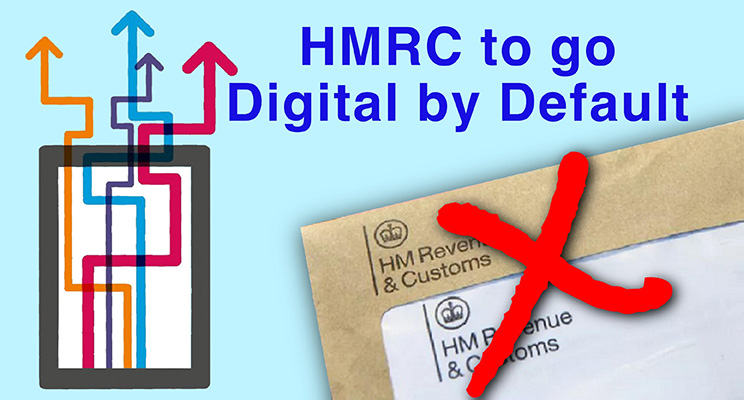
End of the Envelope: HMRC to Go Digital by Default from March 2026
It has been confirmed that from spring 2026, HMRC will stop sending letters by post as standard, moving instead to a digital-by-default system. Email notifications will alert taxpayers to new documents uploaded to their personal tax accounts (PTAs) or the HMRC app. This change, confirmed in the latest Budget, marks a significant shift in how the UK tax authority communicates with the public.
It’s a move HMRC describes as part of a broader transformation: 90% of all taxpayer interactions are to be digital by the 2029–30 tax year. On paper, the move looks like progress. But will it work in practice? Can it be inclusive? And is the infrastructure truly ready to support such a fundamental change?
What’s changing?
Starting in March 2026, HMRC will stop automatically sending letters to taxpayers who interact with the department digitally. Instead, these individuals will receive email notifications when a new document is uploaded to their HMRC account. To make this possible, legislation will grant HMRC the authority to collect valid digital contact details during key interactions, such as annual tax filings.
Paper letters won’t disappear entirely; those who are digitally excluded, or who actively opt out, will still receive paper communications. But for the growing number of people using HMRC’s app or PTA, letters will move entirely online.
This shift is part of a wider overhaul of HMRC’s communications. Not only will notices of assessments, penalties, and compliance letters be digital-first, but the government will also amend key legislation (sections 132 of the Finance Act 1999 and 135 of the Finance Act 2002) to make this possible. In short, the traditional model of written taxpayer engagement is being replaced with an electronic infrastructure that will fundamentally alter how individuals interact with HMRC.
Why go digital?
There are clear upsides for HMRC, most notably the expectation that the department will save £50 million annually on print and postage by 2028/29. More importantly, by reducing the volume of routine correspondence, staff will be freed up to focus on complex cases and provide support for those who need it most. In an era of stretched resources, efficiency gains of this magnitude are difficult to ignore.
Taxpayers may also benefit, with notifications arriving faster, and there’s less risk of paperwork going missing. It’s also important to remember that all HMRC-related documents will be stored in a single secure location (no more hunting high and low for that misplaced paperwork).
For those already comfortable managing their tax affairs online, this change may feel overdue. The move will also streamline correspondence and reduce the need to keep physical records, aligning with the way many already manage their finances.
In a digital-first society, it’s arguably a logical next step for the UK’s largest revenue-raising body. And from an environmental perspective, reducing paper use and mail transport may also yield sustainability benefits over time.
But what about inclusion?
This is where the waters get murkier and potential blind spots start to emerge. HMRC insists paper communications will remain available for the digitally excluded, and safeguards will be put in place to support older taxpayers and those with disabilities. But the effectiveness of an opt-out system depends entirely on its design. If it’s difficult to access, poorly publicised, or burdensome to apply for, vulnerable groups may be left behind.
The equality impact statement acknowledges that those most reliant on paper communications are also the least likely to engage digitally. Many may not realise that their notices, reminders, or penalties have moved online until it’s too late. Meanwhile, the process of collecting email addresses and mobile numbers for millions of taxpayers – including pensioners with new tax liabilities on the horizon – could be more complex than anticipated. Even in this age of high-tech, the data collection effort required to underpin the rollout should not be underestimated.
Data security is another concern, particularly following a high-profile breach of personal tax accounts in June 2025 and a more significant breach last year. Consequently, HMRC will need to reassure the public that it can safeguard sensitive information. It’s not enough to modernise just to tick boxes; that modernisation must be secure, robust, and inspire confidence. Without this, trust in the system risks being undermined at the very time HMRC needs it most.
Digital by Default: Ambition vs. Reality
The broader strategy behind this change is HMRC’s Digital by Default programme. The ambition is bold: by the end of the decade, 90% of taxpayer interactions should take place online. The intention is clear, but the path to get there is less so.
Significant chunks of the tax system remain stuck in the analogue era. Inheritance tax compliance, for example, still relies heavily on paper forms. While HMRC says digital services will be rolled out gradually as systems become ready, past attempts to modernise – such as elements of Making Tax Digital – have shown that digital transformation is rarely straightforward. There are often unforeseen issues, from technical glitches to usability concerns, that can derail even the best-planned initiatives.
Then there’s the issue of language and clarity. The 2024 Administrative Burdens Advisory Board (ABAB) survey flagged persistent problems with HMRC’s communication, particularly online. A digital message is only as good as its content, and simply replacing one confusing letter with a digital version won’t help anyone. Let’s be clear, accessibility is not just about format; it’s about making sure everyone understands what they are being told and what action they need to take.
What should taxpayers do now?
Although the change won’t begin rolling out until 2026, it’s worth preparing now:
- Check your HMRC app or Personal Tax Account: If you already use these services, make sure your contact details are up to date.
- Understand how you’ll be notified: You won’t receive letters by email, just a prompt to check your digital account.
- Consider your preferences: If you’d rather keep receiving post, note the opt-out process when it becomes available.
- Speak to your accountant: We can help ensure you don’t miss important deadlines or notices during the transition.
Being proactive now could prevent missed notifications and help you stay ahead of changes reshaping how tax correspondence is handled in the UK. If you’re unsure about your current setup or need guidance, now is the time to ask.
Final thoughts
HMRC’s shift to digital correspondence is, in many ways, a necessary step and not unexpected. The world is changing, and so too must the infrastructure of our tax system. However, successful digital transformation doesn’t just mean building new systems. It means ensuring they work for everyone, including those who struggle with technology, rely on support, or simply prefer paper.
This move will modernise HMRC’s operations, but it must be done with care and the necessary funding. Accessibility, communication quality, data security, and the capacity to opt out must all be treated as priorities. It’s critical that digital by default does not become exclusion by design.
At Wilkins Southworth, we help clients stay ahead of changes like these. If you have concerns about your digital tax account or how you might be affected by this policy, please get in touch. We’re here to help you navigate the future of tax, whatever form it takes.